Can DPP Become a Consolidation Point? — Potential and Limits
Can DPP Become a Consolidation Point? — Potential and Limits
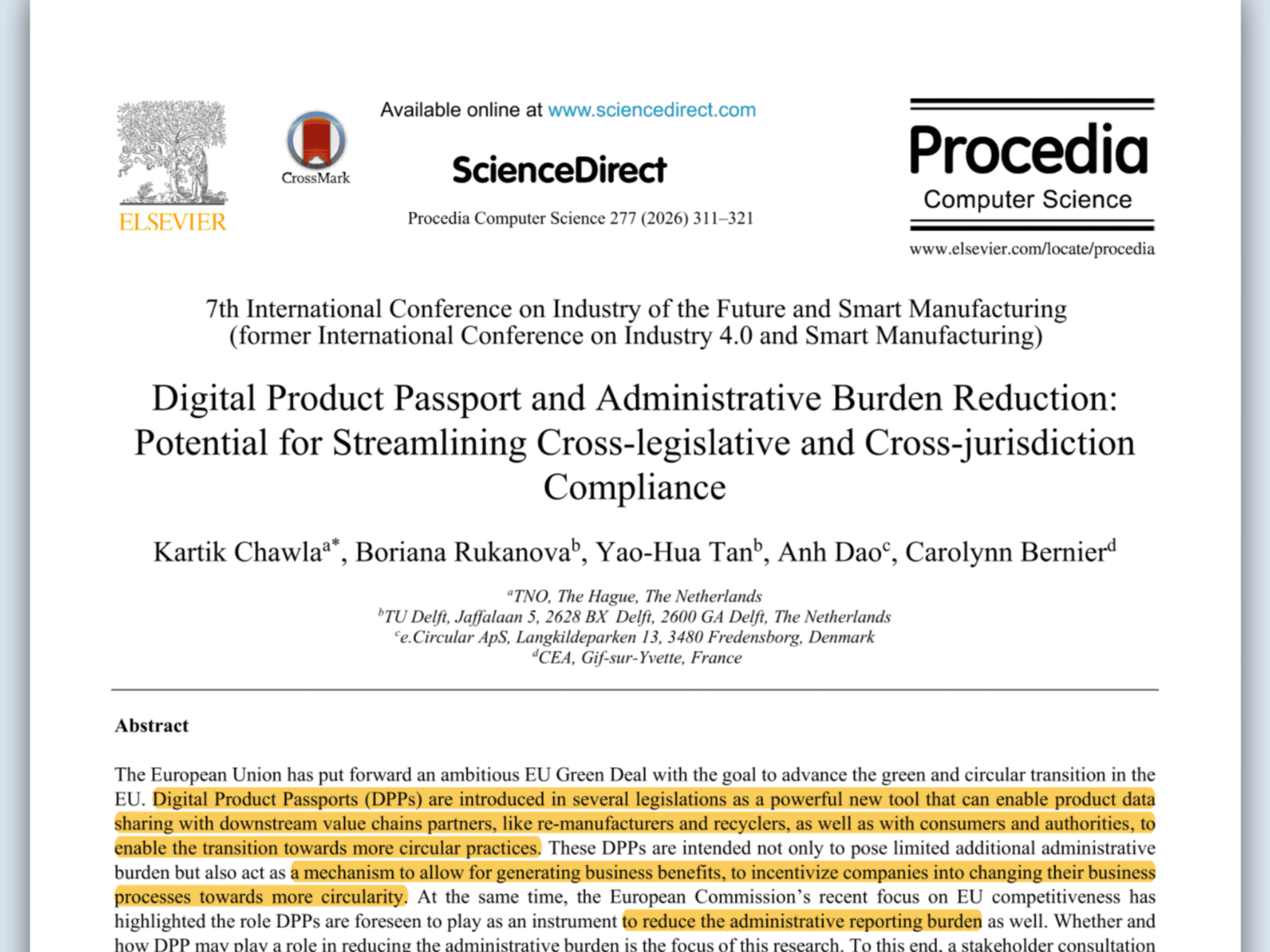
We recently reviewed the paper “𝑫𝒊𝒈𝒊𝒕𝒂𝒍 𝑷𝒓𝒐𝒅𝒖𝒄𝒕 𝑷𝒂𝒔𝒔𝒑𝒐𝒓𝒕 𝒂𝒏𝒅 𝑨𝒅𝒎𝒊𝒏𝒊𝒔𝒕𝒓𝒂𝒕𝒊𝒗𝒆 𝑩𝒖𝒓𝒅𝒆𝒏 𝑹𝒆𝒅𝒖𝒄𝒕𝒊𝒐𝒏: 𝑷𝒐𝒕𝒆𝒏𝒕𝒊𝒂𝒍 𝒇𝒐𝒓 𝑺𝒕𝒓𝒆𝒂𝒎𝒍𝒊𝒏𝒊𝒏𝒈 𝑪𝒓𝒐𝒔𝒔-𝒍𝒆𝒈𝒊𝒔𝒍𝒂𝒕𝒊𝒗𝒆 𝒂𝒏𝒅 𝑪𝒓𝒐𝒔𝒔-𝒋𝒖𝒓𝒊𝒔𝒅𝒊𝒄𝒕𝒊𝒐𝒏 𝑪𝒐𝒎𝒑𝒍𝒊𝒂𝒏𝒄𝒆” by Kartik Chawla, PhD, Boriana Rukanova, Yao Hua Tan, Anh Dao, and Carolynn Bernier — published in Procedia Computer Science as part of the 7th International Conference on Industry of the Future and Smart Manufacturing.
The paper examines whether and how DPP can reduce administrative reporting burden, with a particular focus on cross-regulation and cross-jurisdictional compliance. For CARE ID, it was a timely read.
One of the practically relevant arguments in the paper is that DPP has the potential to function as a consolidation point for product data across multiple regulations — not only #ESPR, but also #REACH, #EUDR, #CBAM, and #CSRD.
The underlying logic is straightforward: 𝗺𝗮𝗻𝘆 𝗿𝗲𝗴𝘂𝗹𝗮𝘁𝗶𝗼𝗻𝘀 𝗿𝗲𝗾𝘂𝗶𝗿𝗲 𝗼𝘃𝗲𝗿𝗹𝗮𝗽𝗽𝗶𝗻𝗴 𝗱𝗮𝘁𝗮, 𝗮𝗻𝗱 𝗶𝗳 𝘁𝗵𝗮𝘁 𝗱𝗮𝘁𝗮 𝗶𝘀 𝘀𝘁𝗿𝘂𝗰𝘁𝘂𝗿𝗲𝗱, 𝗺𝗮𝗰𝗵𝗶𝗻𝗲-𝗿𝗲𝗮𝗱𝗮𝗯𝗹𝗲, 𝗮𝗻𝗱 𝗶𝗻𝘁𝗲𝗿𝗼𝗽𝗲𝗿𝗮𝗯𝗹𝗲, 𝗶𝘁 𝗰𝗮𝗻 𝗽𝗼𝘁𝗲𝗻𝘁𝗶𝗮𝗹𝗹𝘆 𝗯𝗲 𝗽𝗿𝗲𝗽𝗮𝗿𝗲𝗱 𝗼𝗻𝗰𝗲 𝗮𝗻𝗱 𝗺𝗮𝗽𝗽𝗲𝗱 𝘁𝗼 𝗱𝗶𝗳𝗳𝗲𝗿𝗲𝗻𝘁 𝗿𝗲𝗽𝗼𝗿𝘁𝗶𝗻𝗴 𝗿𝗲𝗾𝘂𝗶𝗿𝗲𝗺𝗲𝗻𝘁𝘀.
(In practice, this is something we are already seeing as a real demand from Korean fashion brands preparing for multiple export markets simultaneously.)
𝗧𝗵𝗲 𝗽𝗮𝗽𝗲𝗿 𝗶𝘀 𝗮𝗹𝘀𝗼 𝗰𝗮𝗿𝗲𝗳𝘂𝗹 𝗮𝗯𝗼𝘂𝘁 𝘁𝗵𝗲 𝗹𝗶𝗺𝗶𝘁𝘀 𝗼𝗳 𝘁𝗵𝗶𝘀 𝗽𝗼𝘁𝗲𝗻𝘁𝗶𝗮𝗹. Terms like carbon footprint, recycled content, and circularity may appear across several regulations, but they may be defined and measured differently in each. For the apparel and footwear sector, PEFCR is likely to become an important reference methodology for environmental footprint assessment, including carbon-related product data, within textile-related DPP discussions.
This is a reminder that structured data alone is not sufficient without alignment to the correct measurement framework underneath it. This nuance is important for CARE ID. Rather than claiming that one DPP can automatically solve every compliance issue, we see 𝗗𝗣𝗣 𝗮𝘀 𝗿𝗲𝘂𝘀𝗮𝗯𝗹𝗲 𝗽𝗿𝗼𝗱𝘂𝗰𝘁 𝗱𝗮𝘁𝗮 𝗶𝗻𝗳𝗿𝗮𝘀𝘁𝗿𝘂𝗰𝘁𝘂𝗿𝗲 𝘁𝗵𝗮𝘁 𝗵𝗲𝗹𝗽𝘀 𝗯𝗿𝗮𝗻𝗱𝘀 𝗼𝗿𝗴𝗮𝗻𝗶𝘀𝗲 𝗲𝘃𝗶𝗱𝗲𝗻𝗰𝗲-𝗯𝗮𝘀𝗲𝗱 𝗱𝗮𝘁𝗮 𝗮𝗻𝗱 𝗺𝗮𝗽 𝗶𝘁 𝘁𝗼 𝗱𝗶𝗳𝗳𝗲𝗿𝗲𝗻𝘁 𝗿𝗲𝗽𝗼𝗿𝘁𝗶𝗻𝗴 𝗺𝗲𝘁𝗵𝗼𝗱𝘀, 𝘀𝘁𝗮𝗻𝗱𝗮𝗿𝗱𝘀, 𝗮𝗻𝗱 𝗷𝘂𝗿𝗶𝘀𝗱𝗶𝗰𝘁𝗶𝗼𝗻𝘀.
The research was conducted as part of the CIRPASS-2 - Digital Product Passport project, which makes it a particularly relevant read for those following EU DPP infrastructure developments.
For anyone working on DPP implementation or adoption — whether as brands, supply-chain actors, navigating regulatory alignment across markets — the paper is worth reading!
We recently reviewed the paper “𝑫𝒊𝒈𝒊𝒕𝒂𝒍 𝑷𝒓𝒐𝒅𝒖𝒄𝒕 𝑷𝒂𝒔𝒔𝒑𝒐𝒓𝒕 𝒂𝒏𝒅 𝑨𝒅𝒎𝒊𝒏𝒊𝒔𝒕𝒓𝒂𝒕𝒊𝒗𝒆 𝑩𝒖𝒓𝒅𝒆𝒏 𝑹𝒆𝒅𝒖𝒄𝒕𝒊𝒐𝒏: 𝑷𝒐𝒕𝒆𝒏𝒕𝒊𝒂𝒍 𝒇𝒐𝒓 𝑺𝒕𝒓𝒆𝒂𝒎𝒍𝒊𝒏𝒊𝒏𝒈 𝑪𝒓𝒐𝒔𝒔-𝒍𝒆𝒈𝒊𝒔𝒍𝒂𝒕𝒊𝒗𝒆 𝒂𝒏𝒅 𝑪𝒓𝒐𝒔𝒔-𝒋𝒖𝒓𝒊𝒔𝒅𝒊𝒄𝒕𝒊𝒐𝒏 𝑪𝒐𝒎𝒑𝒍𝒊𝒂𝒏𝒄𝒆” by Kartik Chawla, PhD, Boriana Rukanova, Yao Hua Tan, Anh Dao, and Carolynn Bernier — published in Procedia Computer Science as part of the 7th International Conference on Industry of the Future and Smart Manufacturing.
The paper examines whether and how DPP can reduce administrative reporting burden, with a particular focus on cross-regulation and cross-jurisdictional compliance. For CARE ID, it was a timely read.
One of the practically relevant arguments in the paper is that DPP has the potential to function as a consolidation point for product data across multiple regulations — not only #ESPR, but also #REACH, #EUDR, #CBAM, and #CSRD.
The underlying logic is straightforward: 𝗺𝗮𝗻𝘆 𝗿𝗲𝗴𝘂𝗹𝗮𝘁𝗶𝗼𝗻𝘀 𝗿𝗲𝗾𝘂𝗶𝗿𝗲 𝗼𝘃𝗲𝗿𝗹𝗮𝗽𝗽𝗶𝗻𝗴 𝗱𝗮𝘁𝗮, 𝗮𝗻𝗱 𝗶𝗳 𝘁𝗵𝗮𝘁 𝗱𝗮𝘁𝗮 𝗶𝘀 𝘀𝘁𝗿𝘂𝗰𝘁𝘂𝗿𝗲𝗱, 𝗺𝗮𝗰𝗵𝗶𝗻𝗲-𝗿𝗲𝗮𝗱𝗮𝗯𝗹𝗲, 𝗮𝗻𝗱 𝗶𝗻𝘁𝗲𝗿𝗼𝗽𝗲𝗿𝗮𝗯𝗹𝗲, 𝗶𝘁 𝗰𝗮𝗻 𝗽𝗼𝘁𝗲𝗻𝘁𝗶𝗮𝗹𝗹𝘆 𝗯𝗲 𝗽𝗿𝗲𝗽𝗮𝗿𝗲𝗱 𝗼𝗻𝗰𝗲 𝗮𝗻𝗱 𝗺𝗮𝗽𝗽𝗲𝗱 𝘁𝗼 𝗱𝗶𝗳𝗳𝗲𝗿𝗲𝗻𝘁 𝗿𝗲𝗽𝗼𝗿𝘁𝗶𝗻𝗴 𝗿𝗲𝗾𝘂𝗶𝗿𝗲𝗺𝗲𝗻𝘁𝘀.
(In practice, this is something we are already seeing as a real demand from Korean fashion brands preparing for multiple export markets simultaneously.)
𝗧𝗵𝗲 𝗽𝗮𝗽𝗲𝗿 𝗶𝘀 𝗮𝗹𝘀𝗼 𝗰𝗮𝗿𝗲𝗳𝘂𝗹 𝗮𝗯𝗼𝘂𝘁 𝘁𝗵𝗲 𝗹𝗶𝗺𝗶𝘁𝘀 𝗼𝗳 𝘁𝗵𝗶𝘀 𝗽𝗼𝘁𝗲𝗻𝘁𝗶𝗮𝗹. Terms like carbon footprint, recycled content, and circularity may appear across several regulations, but they may be defined and measured differently in each. For the apparel and footwear sector, PEFCR is likely to become an important reference methodology for environmental footprint assessment, including carbon-related product data, within textile-related DPP discussions.
This is a reminder that structured data alone is not sufficient without alignment to the correct measurement framework underneath it. This nuance is important for CARE ID. Rather than claiming that one DPP can automatically solve every compliance issue, we see 𝗗𝗣𝗣 𝗮𝘀 𝗿𝗲𝘂𝘀𝗮𝗯𝗹𝗲 𝗽𝗿𝗼𝗱𝘂𝗰𝘁 𝗱𝗮𝘁𝗮 𝗶𝗻𝗳𝗿𝗮𝘀𝘁𝗿𝘂𝗰𝘁𝘂𝗿𝗲 𝘁𝗵𝗮𝘁 𝗵𝗲𝗹𝗽𝘀 𝗯𝗿𝗮𝗻𝗱𝘀 𝗼𝗿𝗴𝗮𝗻𝗶𝘀𝗲 𝗲𝘃𝗶𝗱𝗲𝗻𝗰𝗲-𝗯𝗮𝘀𝗲𝗱 𝗱𝗮𝘁𝗮 𝗮𝗻𝗱 𝗺𝗮𝗽 𝗶𝘁 𝘁𝗼 𝗱𝗶𝗳𝗳𝗲𝗿𝗲𝗻𝘁 𝗿𝗲𝗽𝗼𝗿𝘁𝗶𝗻𝗴 𝗺𝗲𝘁𝗵𝗼𝗱𝘀, 𝘀𝘁𝗮𝗻𝗱𝗮𝗿𝗱𝘀, 𝗮𝗻𝗱 𝗷𝘂𝗿𝗶𝘀𝗱𝗶𝗰𝘁𝗶𝗼𝗻𝘀.
The research was conducted as part of the CIRPASS-2 - Digital Product Passport project, which makes it a particularly relevant read for those following EU DPP infrastructure developments.
For anyone working on DPP implementation or adoption — whether as brands, supply-chain actors, navigating regulatory alignment across markets — the paper is worth reading!
Room 207, 37, Seongsui-ro 22-gil, Seongdong-gu, Seoul, South Korea
CEO | Himchan Roh
Business Registration Number | 373-87-02339
E-mail | hello@careid.center
Copyright (C) 2025 Yune Inc. All rights reserved.
Room 207, 37, Seongsui-ro 22-gil, Seongdong-gu, Seoul, South Korea
CEO | Himchan Roh
Business Registration Number | 373-87-02339
E-mail | hello@careid.center
Copyright (C) 2025 Yune Inc. All rights reserved.
Room 207, 37, Seongsui-ro 22-gil, Seongdong-gu, Seoul, South Korea
CEO | Himchan Roh
Business Registration Number | 373-87-02339
E-mail | hello@careid.center
Copyright (C) 2025 Yune Inc. All rights reserved.