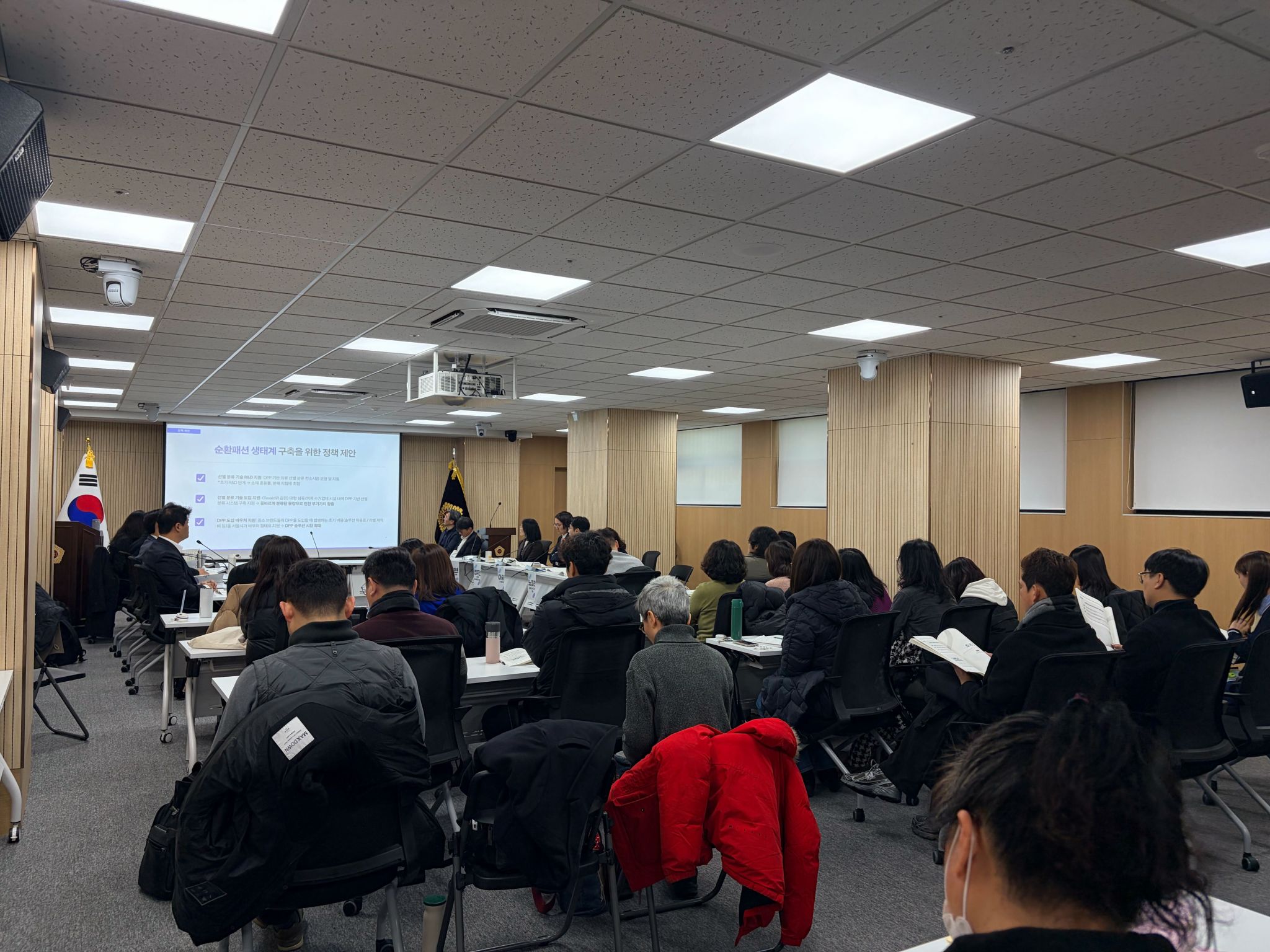
CARE ID presents DPP applications at the Seoul Textile & Apparel Circularity Policy Forum


Today, CARE ID© participated in 𝐭𝐡𝐞 𝐒𝐞𝐨𝐮𝐥 𝐓𝐞𝐱𝐭𝐢𝐥𝐞 & 𝐀𝐩𝐩𝐚𝐫𝐞𝐥 𝐂𝐢𝐫𝐜𝐮𝐥𝐚𝐫𝐢𝐭𝐲 𝐏𝐨𝐥𝐢𝐜𝐲 𝐅𝐨𝐫𝐮𝐦, and we would like to share a few key insights.
In Korea, textile and apparel waste has recently become a critical policy issue, alongside growing discussions around the ESPR policy direction and related national initiatives.
Prior to the panel discussion, 𝐂𝐀𝐑𝐄 𝐈𝐃© 𝐩𝐫𝐞𝐬𝐞𝐧𝐭𝐞𝐝 𝐡𝐨𝐰 𝐃𝐢𝐠𝐢𝐭𝐚𝐥 𝐏𝐫𝐨𝐝𝐮𝐜𝐭 𝐏𝐚𝐬𝐬𝐩𝐨𝐫𝐭𝐬 (𝐃𝐏𝐏𝐬) 𝐜𝐚𝐧 𝐬𝐮𝐩𝐩𝐨𝐫𝐭 𝐜𝐢𝐫𝐜𝐮𝐥𝐚𝐫𝐢𝐭𝐲 — particularly through DPP-based sorting at the downstream stage, including inventory and post-consumer flows.
As a reference case, we shared reverse.fashion, a spin-off from Berlin-based circular.fashion, illustrating 𝐡𝐨𝐰 𝐃𝐏𝐏𝐬 𝐜𝐚𝐧 𝐞𝐧𝐚𝐛𝐥𝐞 𝐩𝐫𝐚𝐜𝐭𝐢𝐜𝐚𝐥 𝐝𝐨𝐰𝐧𝐬𝐭𝐫𝐞𝐚𝐦 𝐜𝐢𝐫𝐜𝐮𝐥𝐚𝐫𝐢𝐭𝐲. Reverse Fashion operates automated sorting and end-of-life infrastructure, and its 𝐃𝐏𝐏-𝐛𝐚𝐬𝐞𝐝 𝐬𝐨𝐫𝐭𝐢𝐧𝐠 𝐩𝐢𝐥𝐨𝐭𝐬 demonstrate how product-level data can improve reuse rates, recycling accuracy, and downstream decision-making.
Following this presentation, the panel discussion moved away from abstract circularity goals toward implementation-level institutional questions relevant to Korea’s fashion and textile waste system, including:
Why sorting and demand-aligned classification are critical, particularly in reducing the unintended consequences of second-hand clothing exports, where mismatched garments are frequently discarded overseas
The need for greater transparency in collection revenues and clearer mechanisms for social return and public benefit
Practical considerations around proposed bans on destroying unsold stock — recognising that the objective is not “zero inventory,” but better production planning and viable post-stock circulation pathways
Why transparency of inventory volumes and treatment methods must come before incentives, to avoid reinforcing overproduction
The role of public procurement in creating stable demand for recycled textile outputs, enabling recyclers and innovators to plan and scale with confidence
𝐀 𝐫𝐞𝐜𝐮𝐫𝐫𝐢𝐧𝐠 𝐜𝐨𝐧𝐜𝐥𝐮𝐬𝐢𝐨𝐧 𝐰𝐚𝐬 𝐜𝐥𝐞𝐚𝐫: 𝐭𝐡𝐞 𝐟𝐨𝐫𝐮𝐦 𝐡𝐢𝐠𝐡𝐥𝐢𝐠𝐡𝐭𝐞𝐝 𝐭𝐡𝐞 𝐢𝐦𝐩𝐨𝐫𝐭𝐚𝐧𝐜𝐞 𝐨𝐟 𝐛𝐮𝐢𝐥𝐝𝐢𝐧𝐠 𝐢𝐧𝐭𝐞𝐠𝐫𝐚𝐭𝐞𝐝 𝐢𝐧𝐬𝐭𝐢𝐭𝐮𝐭𝐢𝐨𝐧𝐚𝐥 𝐟𝐫𝐚𝐦𝐞𝐰𝐨𝐫𝐤𝐬 𝐭𝐡𝐚𝐭 𝐛𝐫𝐢𝐧𝐠 𝐭𝐨𝐠𝐞𝐭𝐡𝐞𝐫 𝐝𝐚𝐭𝐚 𝐭𝐫𝐚𝐧𝐬𝐩𝐚𝐫𝐞𝐧𝐜𝐲, 𝐩𝐨𝐥𝐢𝐜𝐲 𝐢𝐧𝐬𝐭𝐫𝐮𝐦𝐞𝐧𝐭𝐬, 𝐦𝐚𝐫𝐤𝐞𝐭 𝐢𝐧𝐜𝐞𝐧𝐭𝐢𝐯𝐞𝐬, 𝐚𝐧𝐝 𝐩𝐮𝐛𝐥𝐢𝐜 𝐝𝐞𝐦𝐚𝐧𝐝.
We are grateful to the Seoul Metropolitan Government (서울특별시) Government council members, fellow panelists, and participants for a grounded and forward-looking discussion, and we look forward to continued collaboration to translate circular ambition into operational systems.